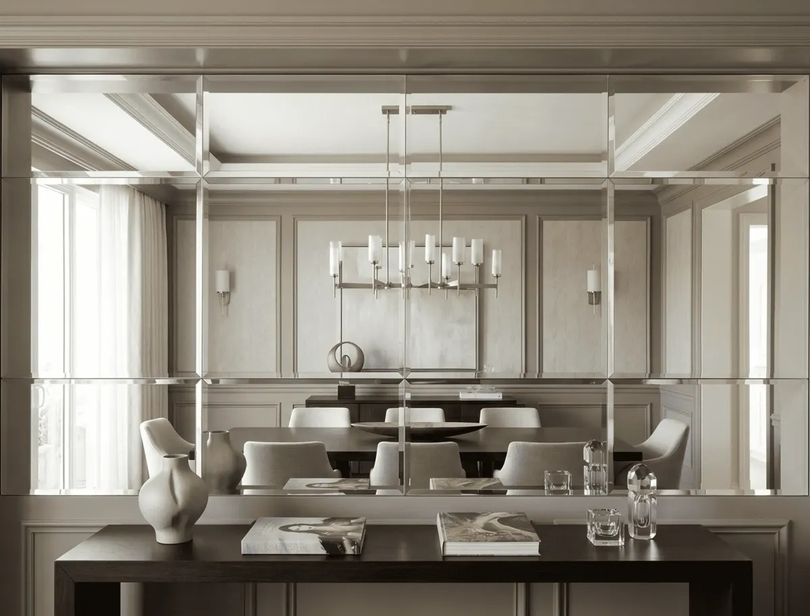

Mirrors can do far more than provide a place to check your reflection. Their shape, placement, frame, and surrounding décor can influence how a room looks and feels. A carefully selected aesthetic wall mirror can introduce depth, reflect natural light, highlight architectural details, or serve as a focal point without taking up valuable floor space. Modern interiors offer plenty of ways to use mirrors as both practical features and decorative elements.
Make an Entryway Feel More Inviting
The entryway sets the visual tone for the rest of the home, yet it is often one of the smallest areas. A decorative mirror can make this space feel more open while providing a useful spot for a final appearance check before leaving.
A large round mirror above a slim console table creates a balanced arrangement. For a contemporary look, consider a frameless design or a simple metal frame. Decorative objects such as a small lamp, vase, or tray can sit beneath the mirror without making the area feel crowded.
A mirror placed opposite a window can also reflect daylight into the entryway, giving a darker entrance a brighter appearance.
Create a Strong Focal Point in the Living Room
Living rooms often benefit from one feature that draws attention without overwhelming the rest of the décor. A large decorative mirror can fill an empty wall while adding visual depth.
Oversized circular mirrors work well above sofas, fireplaces, and console tables. Geometric designs can introduce sharper lines into rooms dominated by soft furniture and curved shapes.
A framed mirror can also coordinate with existing finishes. Black frames pair naturally with contemporary furniture, brass can add warmth, and wood frames can soften a more minimalist interior.
The mirror should have enough surrounding space to breathe. Filling every inch of the wall can reduce its decorative impact.
Use Mirrored Panels for Added Depth
Individual decorative mirrors are not the only option. Mirrored wall panels can cover larger sections of an interior and create a stronger sense of depth.
This approach can work particularly well in dining rooms, hallways, dressing areas, and compact living spaces. Large reflective surfaces visually extend the room while maintaining a clean architectural appearance.
Panel layouts can also introduce subtle design patterns. Beveled edges, divided sections, or decorative borders can give a plain mirrored wall more character without requiring elaborate artwork.
For narrow rooms, vertically positioned panels can emphasize ceiling height, while horizontal arrangements can make a wall appear broader.
Give the Dining Area More Character
A dining room provides an ideal setting for decorative mirrors because reflective surfaces can complement lighting and table arrangements.
A large mirror positioned behind a dining table can reflect pendant lights, artwork, or decorative objects placed elsewhere in the room. The reflection adds another visual layer without requiring additional furniture.
Round mirrors can soften rooms dominated by rectangular tables and cabinetry. Multiple smaller mirrors can create a gallery-style arrangement when placed with consistent spacing.
Care should be taken with placement. A mirror reflecting a cluttered area can make the room feel busier rather than more refined.
Add Style to the Bedroom
Bedrooms benefit from mirrors that combine appearance with everyday usefulness. A full-length mirror can make it easier to coordinate clothing while visually extending the room.
A decorative mirror above a dresser creates a classic arrangement, while a large statement piece above the bed can act as an alternative to traditional wall art.
Mirrors with softly curved silhouettes can complement upholstered headboards and rounded bedside furniture. More angular designs can suit bedrooms with clean-lined cabinetry and contemporary finishes.
Placement should also account for natural and artificial lighting. A mirror positioned near a window can distribute daylight, while one near a lamp can create additional visual warmth.
Turn a Bathroom Mirror Into a Design Feature
Bathroom mirrors are practical by necessity, but they do not have to look ordinary. A custom-shaped mirror can give the room a distinctive architectural detail.
Arched mirrors can soften a bathroom with straight lines and rectangular tiles. Round mirrors can provide contrast above a vanity, while large frameless mirrors can create a quieter appearance.
Backlighting is another useful feature. Soft illumination around the mirror can improve visibility while creating an attractive glow against the wall.
The size of the mirror should relate to the vanity and surrounding fixtures. A well-proportioned mirror can make the entire vanity area feel more intentional.
Experiment With Unusual Shapes
Rectangular mirrors remain popular for practical reasons, but unusual shapes can make a room more memorable.
Organic curves, asymmetrical silhouettes, arches, ovals, and geometric designs can introduce movement to a space. These shapes work particularly well when the rest of the room uses simple furniture and restrained decoration.
An irregularly shaped mirror can serve as artwork while retaining its practical purpose. This makes it useful in rooms where homeowners want decorative interest without adding another framed picture.
Shape also provides an opportunity to repeat existing architectural details. An arched doorway, curved staircase, or rounded furniture can be echoed through the mirror’s silhouette.
Combine Mirrors With Lighting
Lighting and mirrors can work together to create greater visual depth. A mirror placed behind a decorative light fixture can reflect the illumination and make the area appear brighter.
Wall sconces positioned on either side of a mirror provide symmetry while creating useful task lighting. In bedrooms, bathrooms, and dressing areas, this combination can be particularly practical.
Backlit mirrors offer another option for a cleaner appearance. The light source remains concealed while producing a soft halo around the mirror.
The goal is to control reflection rather than simply add more brightness. Light directed toward the mirror can create glare, so fixture placement deserves careful consideration.
Consider Custom Glasswork for Distinctive Interiors
Standard mirror sizes do not always suit unusual walls, built-ins, alcoves, or furniture arrangements. Custom fabrication can provide greater freedom over dimensions, shapes, edge treatments, and installation details.
At Luxurious Glass LLC, decorative mirror designs can be developed around the proportions and character of a particular interior. A custom piece may be shaped to fit an architectural feature, extend across a specific wall section, or complement existing cabinetry and finishes.
Custom work is particularly useful when a mirror needs to perform several roles at once. It can provide reflection, increase the sense of space, highlight lighting, and serve as a visual centerpiece.
Keep the Surroundings in Mind
A decorative mirror reflects whatever sits across from it, so its placement deserves the same consideration given to artwork or furniture.
A beautiful garden, sculptural light fixture, textured wall, or carefully styled console can become more prominent through reflection. Conversely, a mirror facing storage clutter or an unattractive utility area may emphasize something that would otherwise remain unnoticed.
Before installation, consider what the mirror will capture from different angles and during different times of day.
Choose a Mirror That Works With the Room
Decorative mirrors offer an unusual combination of utility and visual impact. They can brighten darker areas, make compact rooms feel more spacious, reinforce architectural details, and provide an alternative to traditional wall art.
The strongest results come from considering the mirror’s size, shape, frame, reflection, lighting, and relationship with nearby furniture rather than treating it as an isolated accessory. A well-positioned piece can become a defining feature while still serving a practical purpose. Contact us today to discuss custom decorative mirror options with Luxurious Glass LLC and find a design suited to your interior.