
Breaking news system in the digital age has completely transformed the way information is delivered and consumed. Earlier, news used to take hours or even days to reach the public through newspapers or television broadcasts, but now it is delivered instantly through mobile apps, social media platforms, and AI-powered news systems. This shift has made journalism faster, more competitive, and more technology-driven than ever before. In 2026, breaking news is no longer just about reporting events but about delivering verified, real-time, and engaging content to a global audience within seconds.
Evolution of Breaking News in Modern Journalism
Breaking news has evolved from traditional reporting methods to fully digital and automated systems. In the past, journalists had to physically collect information, verify it, and then publish it through print or broadcast media. Today, news is captured, verified, and distributed in real time using digital tools. Social media platforms like X, Facebook, and Instagram have become primary sources of breaking updates. This evolution has increased speed but also created challenges related to accuracy and misinformation control.
Role of Social Media in Breaking News Distribution
Social media plays a central role in modern breaking news distribution. Users can instantly share videos, images, and live updates from any location in the world. This has turned every smartphone user into a potential news reporter. While this improves speed and accessibility, it also increases the risk of fake news spreading rapidly. News organizations now monitor social platforms continuously to identify breaking events and verify their authenticity before publishing official reports.
Impact of Artificial Intelligence on News Reporting
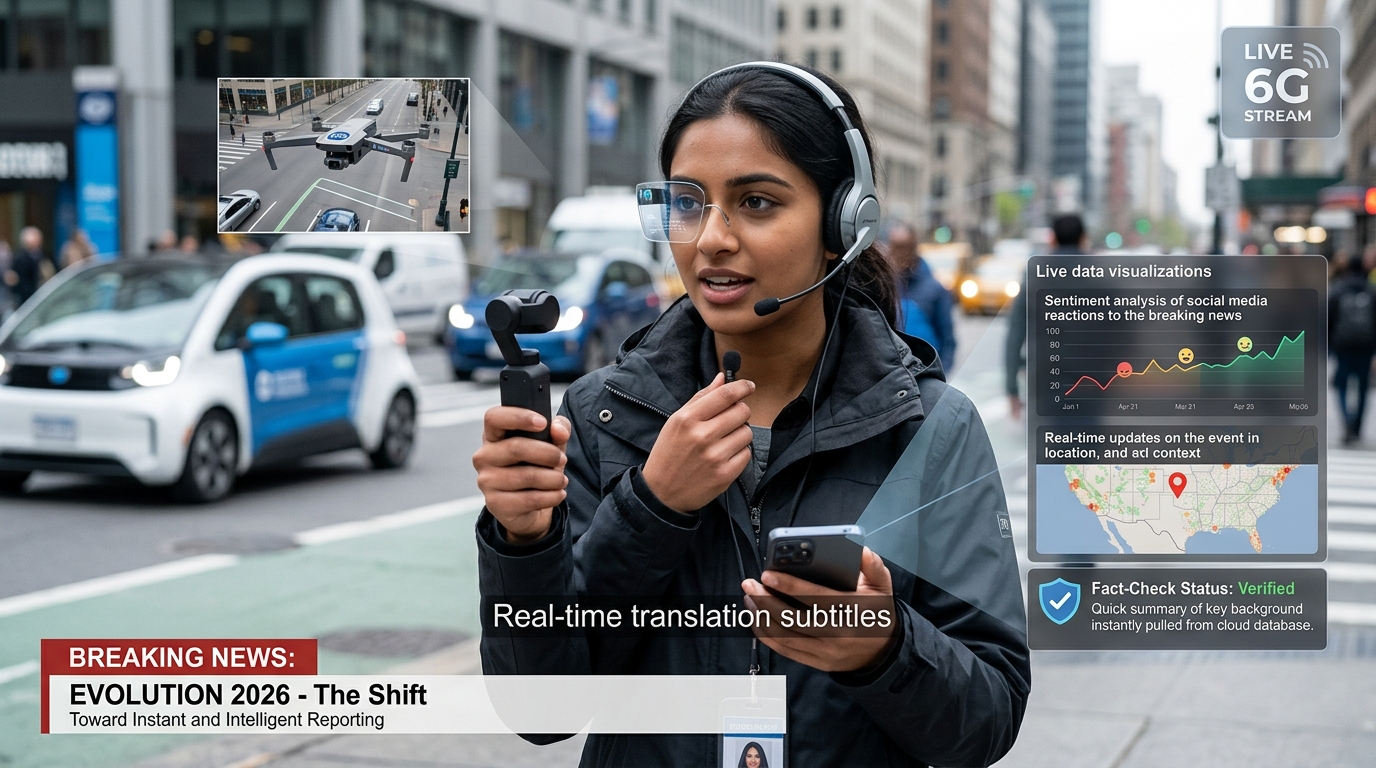
Artificial intelligence has become a major part of breaking news systems. AI tools are used to detect trending topics, analyze data patterns, and even generate initial news drafts. These systems help journalists work faster and reduce manual effort. AI also assists in fact-checking by comparing information from multiple sources. However, human oversight is still necessary to ensure accuracy and ethical reporting standards.
Real-Time News Alerts and Mobile Journalism
Mobile journalism has changed the entire structure of news consumption. People now receive breaking news alerts directly on their smartphones through apps and push notifications. This ensures instant access to important updates regardless of location. Journalists also use mobile devices to report live events, upload videos, and share updates in real time. This has made journalism more flexible and immediate.
Challenges of Speed vs Accuracy in Breaking News
One of the biggest challenges in breaking news reporting is balancing speed with accuracy. In the race to be first, some media outlets may publish unverified information, which can lead to misinformation. On the other hand, delaying news for verification may reduce audience engagement. News organizations must find the right balance between fast reporting and responsible journalism to maintain credibility.
Rise of Citizen Journalism
Citizen journalism has become an important part of breaking news coverage. Ordinary people now report events as they happen using smartphones and social media platforms. This provides raw and immediate information from the ground level. However, citizen journalism also lacks professional verification, which is why professional journalists still play a key role in validating and structuring news content.
Future of Breaking News Technology
The future of breaking news will be driven by automation, artificial intelligence, and predictive analytics. News systems will become more personalized, delivering updates based on user interests and behavior. AI will also help predict potential breaking events before they fully unfold by analyzing global data patterns. This will make journalism more proactive rather than reactive.
Importance of Verified News Sources
Verified news sources are essential in maintaining trust in the digital age. With the rise of misinformation, audiences rely more on credible media organizations that follow strict verification processes. Fact-checking departments and AI verification tools are becoming standard in modern newsrooms to ensure reliability and transparency.
FAQs
Why is breaking news faster today
Because of digital platforms, social media, and mobile technology
How does AI help in news reporting
It helps in detecting trends, verifying facts, and generating reports
What is citizen journalism
It is news reporting done by ordinary people using mobile devices
Why is fake news a problem
Because it spreads quickly on social media without verification
What is the future of breaking news
It will be AI-driven, real-time, and highly personalized
Conclusion
Breaking news systems have completely transformed journalism in the digital era. Speed, accessibility, and technology have made news more immediate and widespread than ever before. However, this rapid transformation also brings challenges like misinformation and accuracy concerns. In the future, artificial intelligence, automation, and verified reporting systems will make breaking news more reliable, intelligent, and user-focused, ensuring that audiences receive accurate information in real time.